The Otto Specht School Blog
Words of Wit and Wisdom
A Day in the Night of Winter
Once upon a time, in the heart of a peaceful kingdom, there lived a courageous princess named Aurora. She was known far and wide for her fearless spirit and unwavering determination. Aurora's dearest companions were her loyal friends, Percival, a forgetful pig with a heart as big as the kingdom itself, and Randolph, a very old and cranky rooster with such a deafening cock-a doodle-dang-it that it could wake up the entire Kingdom.
Their kingdom was nestled on a farm where Percival and Randolph spent time doing what pigs and roosters do, alongside the cows, yaks and donkeys. The farm was full of love and kindness and provided the people of the kingdom with all they needed to eat. That is, until a King who wanted everything to be always the same came and cast a spell on the farm and the kingdom. King Stuckalot, as he was called, cried out, “This kingdom is now mine and will be a place of forever darkness and cold. No more changing of the seasons.”
Once upon a time, in the heart of a peaceful kingdom, there lived a courageous princess named Aurora. She was known far and wide for her fearless spirit and unwavering determination. Aurora's dearest companions were her loyal friends, Percival, a forgetful pig with a heart as big as the kingdom itself, and Randolph, a very old and cranky rooster with such a deafening cock-a doodle-dang-it that it could wake up the entire Kingdom.
Their kingdom was nestled on a farm where Percival and Randolph spent time doing what pigs and roosters do, alongside the cows, yaks and donkeys. The farm was full of love and kindness and provided the people of the kingdom with all they needed to eat. That is, until a King who wanted everything to be always the same came and cast a spell on the farm and the kingdom. King Stuckalot, as he was called, cried out, “This kingdom is now mine and will be a place of forever darkness and cold. No more changing of the seasons.” The people tried to talk to the king but he refused to budge. The first snowfall wrapped the kingdom in the usual blanket of beauty and peace a first snowfall brings, but soon the freezing temperatures and relentless ice and snow caused the people to huddle all alone in their houses. They could not even step outside. The more they feared, the more lonely they became, and King Stuckalot’s spell grew stronger.... Thick ice and snow covered the kingdom. The usual winter joys of skating on frozen ponds and sledding down hills could not be enjoyed as the cold and the dark were so cold and so dark.
Being the wise and brave princess that she was, Princess Aurora knew what had to be done. She would not stay huddled in fear forever. She turned to her two faithful friends, Percival and Randolph, and said “We must go together and save the kingdom. Percival, you must bring words of warmth, and Randolph, you must sing to the sun until it can shine again and I shall use my sword of gold. Together we will break the spell.” Cranky Randolph complained that this was altogether not possible and they were doomed to be ice pops forever. Nonetheless, he joined his friends. As they made their way through the dark, cold, and ice-filled forest, Percival looked to the princess and said “ wait, what are we doing again?” Randolph rolled his eyes but before he could answer, the three friends came upon a massive wall of ice .
Percival, despite his forgetful nature, had a remarkable knack for understanding the earth and the changing seasons. He could feel the land's despair and the people's fear, and he could hear the sizzling from the fire deep within the earth; and oh did that fire sound wonderful! Percival suddenly remembered a rhyme from when he was a piglet and shouted it out:
Hungry pigs gathered, a rowdy crew,
Their appetites big, their manners few,
But in the fire of friendship they’d find delight,
Sharing their slop, such a comical sight,
With oinks and giggles they roll in the hay
Their curly tails spin - oh what a warm wonderful day!
Oink -idi-oink!!
As Percival oinked these words with pride and joy, he giggled and wiggled shouting “Sing Randolph Sing!” Randolph, despite being cranky and feeling very nervous, unleashed his the loudest cock-a-doodle- dang -it ever. The piggies' words danced on the do’s and dangs of the old rooster's song.
Suddenly, a ray of light began to shine out from deep inside the earth’s core, making its way up to the icy wall. The wall began to crack and there it was - King Stuckalot’s immovable castle of ice.
Princess Aurora, filled with the fire of courage charged through the wall and plunged her golden sword into the heart of the ice castle . The small ray exploded into a radiant light that burst forth, reaching straight up to the sun. The ice began to shatter and King Stuckalot began to melt.
Percival, who could not swim, slipped off the melting ice block into the freezing water. The Princess ran to save him but was only able to grab his curly tail. “ Help Randolph” Princess Aurora cried out. The rooster shivered with fear. “Oh what to do-do-do dang it do…” he crowed. The freezing water was about to swallow Princess Aurora and Percival when Randolph, for the first time ever in his long life, used his mighty wings to fly . He flew up into the sky then swooped down to grab the princess and the pig and flew them to safety, landing on a soft mound of snow and hay. The sun began to shine and King Stuckalot continued to melt, turning into a small shining pond. The spell of King Stuckalot had been broken!! The trees began to bend with joy and the animals frolicked and the people of the kingdom cheered the praises of the princess, the pig and the rooster.
Unfortunately, the old rooster had given all the energy he had left in his old life when he spread his wings and saved his friends. He lay on the ground while the princess stroked his feathers. For the first time, since before he hatched so many moons ago, he smiled, and with his smile he closed his eyes and slipped away into the warm canopy of forever sleep. A gentle tear fell from the eye of the princess and sparkled as it landed on Randolph's mighty crown - which never looked so grand. All of a sudden, a glorious wind swirled around the three friends, swooped up old Randolph and carried him high in the sky into the arms of the sun. To everyone's surprise, Randolph opened his wings and flew - up and away into the heavens. The sun was out and the imprisoning spell of endless darkness was over. Now the seasons could return, the crops could grow, the eggs could hatch, and the people could return to caring for the land and the kingdom they loved.
That night, as Princess Aurora lay in her cozy bed with her fabulously forgetful pig by her side, she gazed out at the night sky and there he was - Randolph - a sparkling constellation of stars right up in the North.
Princess Aurora shrieked with delight. “ Look Percival ! she exclaimed “There in the sky - it's Randolph!” Randolph the brave and selfless rooster was given the glory of twinkling light for the rest of eternity.
Princess Aurora grew up to be the Queen of the peaceful kingdom and Percival, the forgetful pig, became mayor of the farm. With his big heart and wise ways, he always reminded the animals to prepare for whatever changes were coming - even if he could not quite remember at the moment what the change would be - it was ok. While Percival’s mind could forget things, Percivals heart never waivered. Together he and Queen Aurora lived a long and happy life, visiting with Randolf every night. The shining pool that once was King Stuckalot, reflected all the beautiful seasons on its surface, and the people celebrated its ever changing state. Children watched tadpoles turn to frogs in springtime, swam in its cool water in the summer, sailed bark boats decked with red and gold leaves in the autumn, and skated on its frozen surface all throughout the winter, which would not last forever.
And Randolph, as he watches from on high still twinkles in the sky and protects all farms and animals, even to this day.
If you look to the night sky, you will always see Randolph's star sparkling brightly in the north; always there to light your way through even the darkest of days.
Farm & Garden Update: 100 Years of Biodynamics
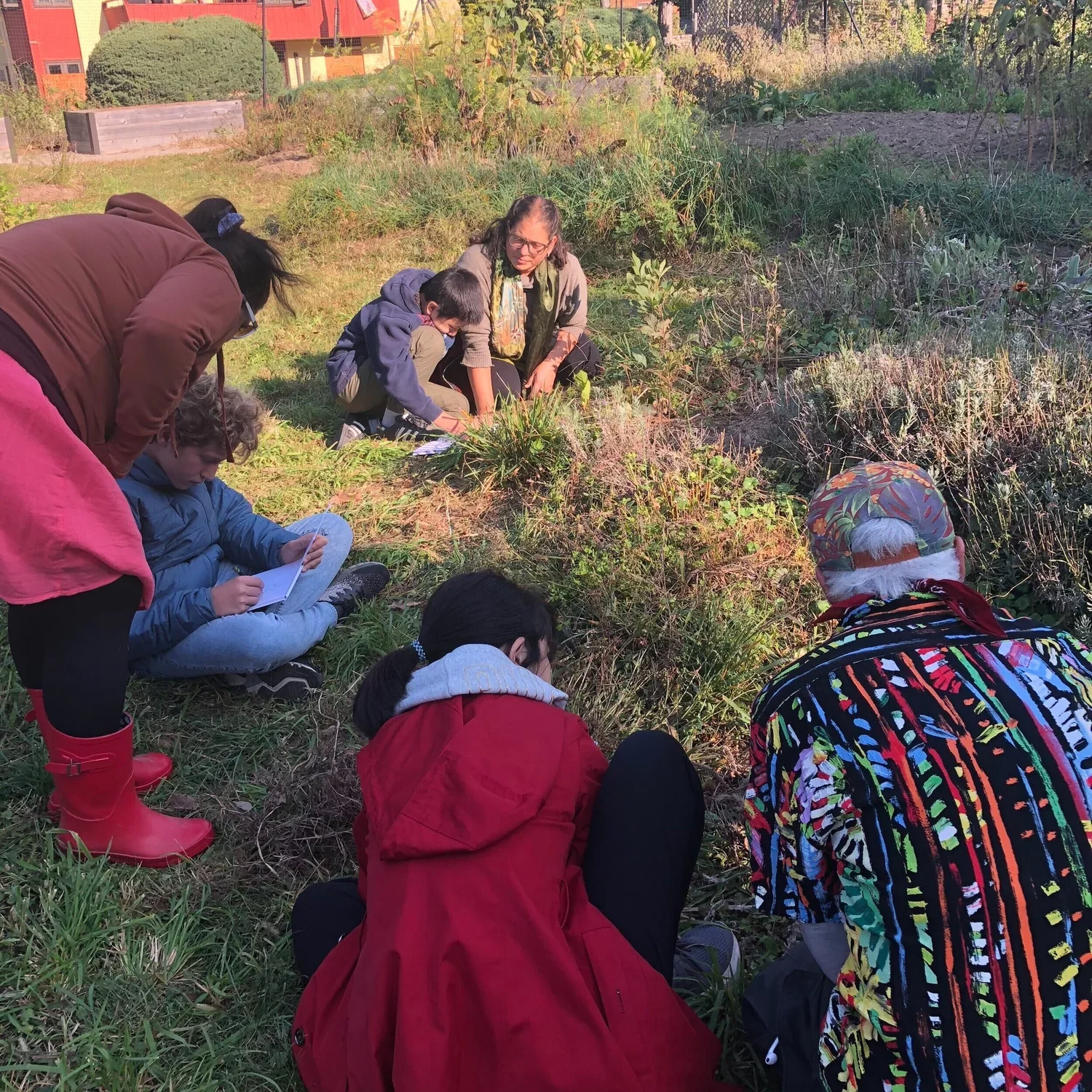
One Hundred Years ago, in the final years before Rudolf Steiner’s death, he gave some of his most significant and enduring lecture series’, including the Agricultural Course. From his indications in this course surged forward a new method of agriculture, firmly rooted in the essential nature of plants, animals, soil, and spirit, a contrast to the increasingly technologically driven methods arising at the time. This impulse came to North America, with Ehrenfried Pfeiffer, one of a small group tasked with developing these agricultural methods. Pfeiffer came to a small town in New York, an easy distance from the city, called Spring Valley, now known as Chestnut Ridge, where a small farm had begun. Here, at Threefold Farm, he provided summer conferences. For the first time on this continent, Biodynamic Agriculture was practiced and biodynamic research was carried forward, right here on our school campus. These methods have continued to be practiced in the care and cultivation of the land here, and our students are now active participants in this work.

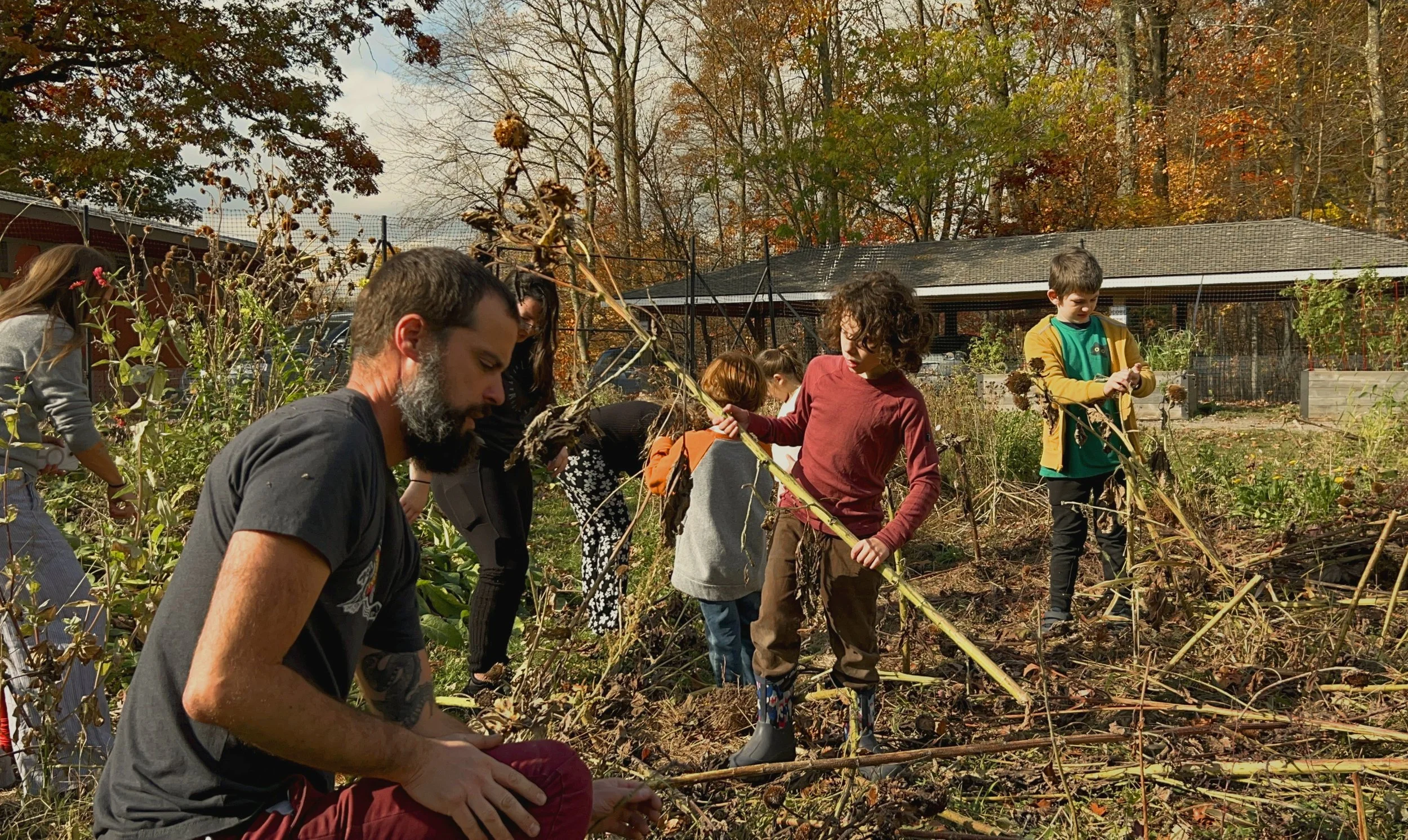
Both the Medicinal Garden and the OSS North Farm were some of the original garden areas on campus, whose footprints and agricultural work our school re-established in recent years. The forests, gardens, and pastures we work in traverse every day, have had farmers oversee its use and care with biodynamic principles and insights. Decades of building soil, layer after layer, with compost and crop rotations, biodynamic preparations, and a planting cycle attuned to the planetary movement, continue to imbue the land with health and generating forces. The impulse for a paradigm shift in viewing the land as a spiritual being and not just an ends to a means, to care, protect, and preserve it with reverence rather than greed, is no less needed now than it was 100 years ago. Biodynamics, like Waldorf Education, came about so we could prepare for the future, to bring healing to the traumas Steiner saw coming to our earth and our humanity. At Otto Specht, we are working together with Endeavor21+ to build and maintain the Medicinal Garden as a community space. This garden, which has flourished and faltered in recent years, was one of two kitchen gardens when Mac Mead, renowned biodynamic educator who continues to help operate Threefold Community Farm and runs a yearly biodynamic course, first came to the community. OSS North continues to develop into a thriving micro-farm, with a small orchard added where potatoes were grown this year between the young trees. Students proudly returned home with potatoes and other goods, snacked on husk cherries, and had the benefit of participating in nearly a full year’s cycle of growing, especially those who joined for summer school. Barley, oats, and peas have now been sown as this year’s cover crop and students will begin to transition into the greenhouse work where each class will have its own specific focus.
In our school and in our community, we are manifesting those impulses generated a century ago. We are, here and now, in this current time, on this significant piece of land, doing this important and meaningful work. It remains medicine and work not just for now but for the future, and watching the students connect and actively engage in the rhythms of the land and the season, makes me happy and hopeful.
Parent Spotlight: Rachel Shimmerlik Brown
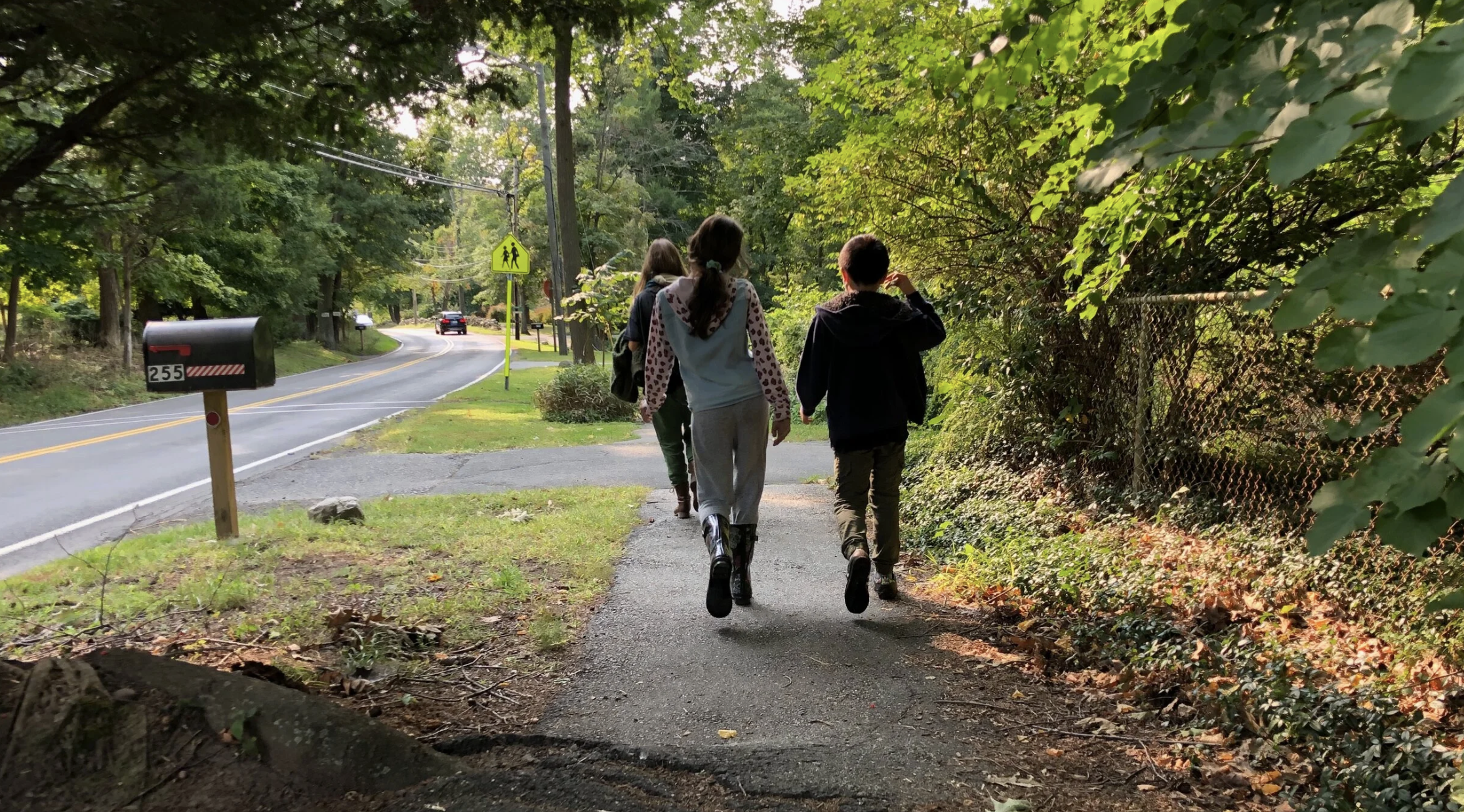
“My mom is up there,” Amara said wistfully one spectacular early fall morning as the sun sent piercing golden rays through the not-quite changing leaves. Turning to the 3rd grade teacher, Mr. Goddard, she asked, “Can you get me a REALLY tall ladder?” “That’s called the stairway to heaven,” he told her. A while later, as they walked to Farm and Harden, Amara’s friend waved at the sun. “Hi Amara’s mom.” “Not now,” said Amara. “My mom is sleeping.”
“My mom is up there,” Amara said wistfully one spectacular early fall morning as the sun sent piercing golden rays through the not-quite changing leaves. Turning to the 3rd grade teacher, Mr. Goddard, she asked, “Can you get me a REALLY tall ladder?” “That’s called the stairway to heaven,” he told her. A while later, as they walked to Farm and Garden, Amara’s friend waved at the sun. “Hi Amara’s mom.” “Not now,” said Amara. “My mom is sleeping.”
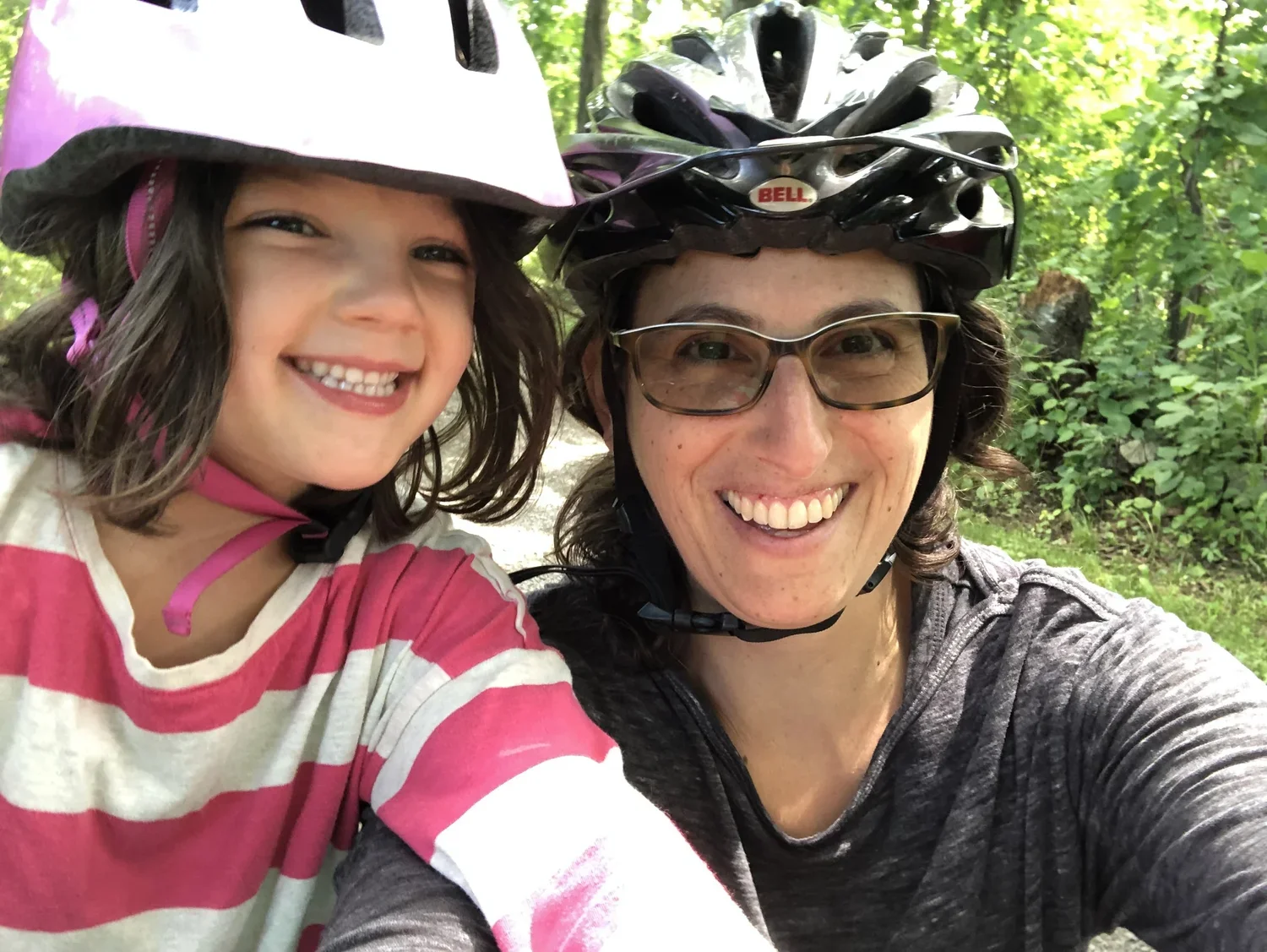
Rachel and her husband Eli moved their lives to the community in January so their daughter, Amara, could attend the Otto Specht School. Rachel quickly became a connector within the parent body of the school. The geographic distances between our families was no barrier for Rachel’s reach and warm invitations - to have playdates and to simply connect as a unique set of parents whose children often do not conform to the typical expectations of their age. Rachel connected as well to families throughout the local community as she took bike rides and walks with Amara, an enthusiastic friend to all who she met. Rachel seamlessly struck up conversations with the parents of each child Amara engaged with. When summer came, Rachel spent many afternoons swimming with her daughter at the pond while both continued to widen their circles of friendship. Rachel watched as Amara navigated the social landscape, something so natural to Rachel, but where, despite such deep interest, Amara often found it hard to enter in. Rachel skillfully found the moments to intervene, to ask a question, or to model a social norm. Amara began to find her way with more ease as summer progressed, and new friends were firmly established.
Our community was the last in which Rachel was able to form these deep friendships and connections, but from every era of her life Rachel had true and lasting friendships. Hundreds of people showed up days after her passing to celebrate her life and share in their collective sadness. Hundreds more joined via zoom. Rachel, it was clear, touched so very many lives profoundly even in her abbreviated time on earth. Everyone spoke of her ability to make life more enjoyable, to find a space for humor, and to just be there when needed. She could throw an impromptu dance party amidst what could be a mundane moment such as making breakfast. She knew how to live and she had also contemplated how to die when faced with Leukemia earlier on in life.
At her service, Eli read her favorite stanza of her favorite poem, “Thirteen Ways of Looking at a Blackbird” by Wallace Stevens.
It was evening all afternoon.
It was snowing
And it was going to snow.
The blackbird sat
In the cedar-limbs.
The contrast of this image to the humid, late August day outside seemed to emphasize the sudden departure of warmth and light that Rachel brought to this physical world. At first,one might be surprised that this introspective stanza was a favorite of Rachel’s. But thinking about this poem; so many perspectives of a blackbird, of nature, of human nature, of oneself, it makes sense. This is Rachel - her way of listening, considering, and bringing perspectives; her ability to go inside, deeply, but not shut herself off from twelve other ways of looking at a blackbird, and endless ways of looking at life.
In myriad ways as well, we have watched Amara navigate her sadness and its many accompanying emotions. We have seen her make sense of her loss in ways that only the young and wise can do. Amara has a strong spirit, the kind of spirit that makes an undeniable difference in the world. Whether by chance or something greater, Rachel and Eli brought her here to our school, and meeting her at this moment feels significant. It matters that she is here and that we can provide a fortress of love she can push and bump up against, relax into, and be held by. All the while, we witness and learn. “It’s ok,” Amara said, confidently. “She knows who we are and she’s thinking about us.”
Back to Basics
Allowing for the forces of growth to metamorphosis into thinking forces is a natural step of becoming fully human. The reverence of being able to witness this change in the students has been a force of growth for me as a teacher. How much there is to learn from one another!
Back to basics
Remember why you came
If you're going to give off light
Then you must endure the flame
Time has its toll
And some may call it pain
Transcend it all
And turn a loss into a gain
Death to the cloud
Is birth to the rain
This poem came to me at a time when I was questioning my ways about engaging with the world. The feeling of complexities that ended up going in circles, and in the end not being as helpful as I wanted them to be. The Buddha has a saying that "One candle can light 10,000". Now if that isn't simple effectiveness then what is! The wood that we burn in a fire is an expression of the tree's life. All the warmth and light given to it by the Sun has been "captured" in the wood and upon burning is then "released". The life-giving flame transmutes that which the tree has once been given and we then participate in this process. Thich Naht Hanh is a Vietnamese Buddhist who wrote many books about how to live a meditative life and how mindfulness is essential to this practice. In his book No Death, No Fear, he draws the reader's attention to the interconnectedness of Life; how the pages that one is holding came from the tree, how the tree grew from the rain, Sun, soil, and air. These elements needed to be there for the book to come into expression. By witnessing this holding of world connection, the possibility is there for peace to arise. In the lawfulness of connection, we are not bound like a chain but rather free to express ourselves, knowing that every element is there as well.
Day 1: Slavi
Day 2: Angel
Day 3: Slavi
Day 4: Benjamin
Day 5: Elisha
Day 6: Angel
Day 7: Parker
Time and Measurement
a Poem by Sean Goddard to support the third grade curriculum as they study measurement
Time flows in a circle
But one that always grows
It's something I can count on
Like fingers and my toes
The seasons are a gift
and offer me their power
Each month has its turn
Like minutes in an hour
The second may be small
But without them, there's no year
When the night is gaining strength
I know the Sun is near
At the Otto Specht School, I find that the "basics" are a golden rule for success. Laying a strong foundation is essential if any further growth wants to be formed with a firm footing. The students remind us how they see the world and if we can hold this perspective with their future in mind, our cooperation will help them flourish. The rate at which they change can make one's head spin! Within this capacity to change is the adaptability to life's circumstances and challenges. Resilience is effective to the extent that our connection can be sought and found, again and again.
Allowing for the forces of growth to metamorphosis into thinking forces is a natural step of becoming fully human. The reverence of being able to witness this change in the students has been a force of growth for me as a teacher. How much there is to learn from one another!
An Alumni Reflects
Allow me to reintroduce myself. I am Henry Stutman, once a curious student of Otto Specht, and now embarking on a new academic venture as a master's student in Cybersecurity. The journey from Otto Specht's classrooms to the intricate realm of cybersecurity might seem long and winding, but the connection, for me, is profound.
Dear Otto Specht School Community,
As the scent of autumn fills the air and leaves dance in shades of auburn and ochre, I'm reminded of the cherished memories from my formative years spent within the nurturing walls of the Otto Specht School. It seems like a distant past, yet the reverberations of those invaluable experiences are palpable in my life every day.
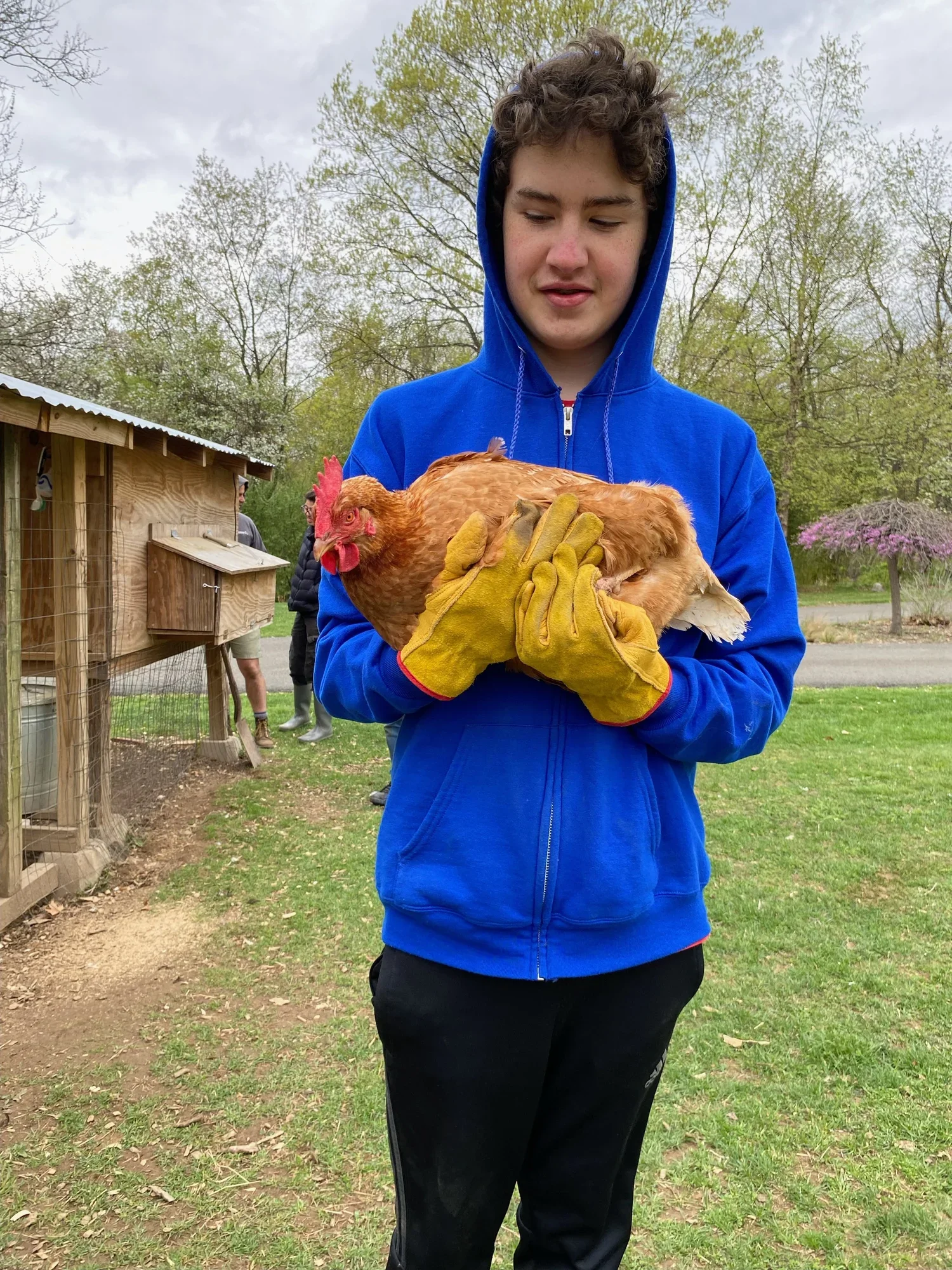
Allow me to reintroduce myself. I am Henry Stutman, once a curious student of Otto Specht, and now embarking on a new academic venture as a master's student in Cybersecurity. The journey from Otto Specht's classrooms to the intricate realm of cybersecurity might seem long and winding, but the connection, for me, is profound.
The Otto Specht School, for those fortunate enough to experience it, isn't merely an institution of learning; it's a cradle of character building, creativity, and camaraderie. Each faculty member, with their unwavering commitment and unparalleled dedication, instilled in me values that went beyond academic pursuits. The support system I found in my peers, the safe environment to explore, fail, and learn, have all been instrumental in shaping my confidence and determination.
Today, as I delve deep into the world of cybersecurity, safeguarding digital realms and ensuring a safer virtual environment, I often draw parallels with the protective and nurturing aura of Otto Specht. The school taught me to value each individual's unique strengths, respect diversity, and always work towards the collective good. These are not just essential traits for a cybersecurity professional but are life skills that resonate in every sphere.
For the young minds currently experiencing the magic of Otto Specht, know that the lessons you imbibe here will resonate in myriad unexpected ways in your future endeavors. Cherish every moment, embrace every challenge, and remember, every experience is preparing you for the vast world that awaits.
In the spirit of gratitude, I want to extend my sincerest appreciation to the entire Otto Specht community. The foundation you provided has enabled me to dream big, work hard, and continuously aspire for excellence. Though I am now immersed in codes and algorithms, the heart of Otto Specht beats within me, reminding me of my roots and the journey ahead.
With heartfelt thanks and best wishes for the future,
Henry Stutman
Sam Leopold 7/24/1948 - 1/4/2023
Samuel Cooklyn Leopold was born to his parents, Bernice and Herb on July 24th in 1948. It's worth noting that his mother's father passed away on the day of his birth and she always said that he had come to her in a vision as Sam was coming into the world.
The youngest of three siblings, he grew up in a suburban neighborhood of Philadelphia with his two sisters, Marjorie and Bobby.
At 8 years old, Sam began attending a two month sleep away camp every summer in Algonquin Park, in Ontario Canada. This was likely, where he first developed his love of being outdoors as well as feeling the joys of living as part of a community. He told me many stories of week-long canoe trips, rowing all day, portaging from lake to lake and sleeping in tents at night or sometimes right out under the stars. Singing camp songs whenever the opportunity arose and working together preparing for meals and cleaning up afterwards, he talked about Camp Arowhon with great fondness and referred to his time there as formative.
I've have been tasked and I'm honored to share with you now, the biography of my father's life.
Samuel Cooklyn Leopold was born to his parents, Bernice and Herb on July 24th in 1948. It's worth noting that his mother's father passed away on the day of his birth and she always said that he had come to her in a vision as Sam was coming into the world.
The youngest of three siblings, he grew up in a suburban neighborhood of Philadelphia with his two sisters, Marjorie and Bobby.
At 8 years old, Sam began attending a two month sleep away camp every summer in Algonquin Park, in Ontario Canada. This was likely, where he first developed his love of being outdoors as well as feeling the joys of living as part of a community. He told me many stories of week-long canoe trips, rowing all day, portaging from lake to lake and sleeping in tents at night or sometimes right out under the stars. Singing camp songs whenever the opportunity arose and working together preparing for meals and cleaning up afterwards, he talked about Camp Arowhon with great fondness and referred to his time there as formative.
In the summer of 1960, when Sam was 12, his family moved to Evanston Illinois, a suburb of Chicago where his father had become president of a prominent camera company. That year, instead of heading home to Philly, Sam returned from camp to a new environment and to what would wind up being a very tough year ahead. A year fraught with a myriad of challenges, both at school and at home.
In the classroom, Sam suffered from learning challenges and, at the time, he was simply labeled a bad student. His academic struggles along with several schoolyard fights eventually led his parents to sending him off to St. John’s Military Academy in Delafield, Wisconsin at the age of 13.
His time in the military academy was not happy. He didn't fit in and he paid the price in disciplinary measures and social confrontations. He was expelled within about a year and he was headed back home to Evanston.
It was upon his return home that Sam met Ernestine. His parents had hired her as a live-in housekeeper and her influence on Sam's life would forever change him. Ernestine was from New Orleans, around 45 or 50. She cooked and cleaned for the family and when she wasn’t working, she played her guitar and listened to her music. Often, Sam and his sisters were allowed to listen in. She would become Sam’s first guitar teacher and by the time he was fourteen, he knew all about the Chicago blues scene and was playing the likes of Muddy Waters, Big Bill Broonsy and Lead Belly in his bedroom at night. It was during this time that he also developed an interest in poetry and in particular, the work of Walt Whitman.
Sam spent 9th and 10th grade attending Evanston high School in Illinois but mostly, focusing on practicing his guitar and on his growing interest in the civil rights movement.
By junior year, still disinterested in schoolwork, Sam was sent to the Stockbridge School, a progressive boarding school for kids more like Sam, kids who were struggling with big, competitive public schools. Stockbridge had small classes and a lot of attention to humanities and the arts. Sam was comfortable there…over the years he spoke to me a lot about his time and experiences there.
Sam graduated from Stockbridge in ’67. At graduation, Sam was asked if he would like a summer job -- accompanying a group of younger Stockbridge School girls on their trip around Europe for two months. He took the gig. His responsibility was to keep them out of trouble – which was no easy task. It was Sam’s first taste of major European cities, and the “travelin’ man’ he later wrote and sang about was born that summer.
He tried his hand at college for a short period, enrolling himself at Franconia, but after a few months, Sam found himself at a crossroads. The Vietnam conflict was underway and the draft was upon him. An existential dilemma for a man with a fundamental distaste for war. A student deferment seemed like the best way to avoid the draft.
Sam wanted to write music, sing, play his guitar and travel. That was his ambition. In early spring of 1968, with a one way plane ticket, Sam flew off to Europe. He had some money that would last him until he could figure out how to earn his own way. He flew out the same day Dr. Martin Luther King, Jr. was assassinated in Memphis.
I don’t know how long Sam stayed in Europe, earning food money and shelter by street singing and passing the hat. I do know that he eventually made his way to Greece. It was there that he cracked open a book by Nikos Kazenakis, entitled St Francis, about the early Christian Saint known for his commitment to peace, kindness and service towards all living beings. He read all 600 pages sitting on a roof in The Placa in Athans across from the Acropolis.
From Greece, Sam made his way to an Israeli Kibbutz which offered him a way to support himself and explore the idea of community life. He worked as a cowherd. Picture him – long legged Sam, eighteen or nineteen, long hair, thin face, playing his guitar whenever he had time. He wrote a love song many of you may have heard, ultimately entitled “The Widow of Aqaba,” about an Israeli man and a Palestinian woman who fall in love.
In the years from 1968 through 1973, Sam spent much of his time traveling Europe and the world. It was through the experience of playing on street corners and small music venues that he developed his "performance persona".
He followed the tourists. Summers on the Mediterranean in France, Italy, Spain and Israel. Travelling up north in Holland and Scandinavia; Winters at the ski areas in Switzerland and Germany. In geneva, he worked the cafes of the old city. In Paris, he sang in the cafes of the West Bank and Momatre. Those years were "earn-as-you-learn" and every time he opened his guitar case, he felt stage fright, wondering if he could raise a crowd and if any of them would throw money into his open guitar case. In Jerusalem, 1973, he met a piano player named Jeff Labes who had been touring and performing with Van Morrison during the Moondance era. They traveled and played together until Sam moved back to the States at 22. Jeff would ultimately become Sam's producer once he signed with Mercury Records.
Sam returned stateside to a thriving music scene in Chicago and he had the chops to play some of the best clubs in town by that point. One night, he was approached by two A&R executives from Mercury Records and this meeting led to him signing a record deal and hitting the road once again. Now, well established as a professional musician, he played concerts and clubs on bills with the likes of Emmylou Harris, Bonnie Raitt, Vassar Clemens, Pete Seeger, Charles Mingus, Steve Martin and the list goes on. Sam continued to pursue his music career over the coming years although I believe his character led him to seek a different life at that time and he wound up moving away from that world when it came time to raise a family.
In 1976, Sam met my mother, Lesley in NYC through a mutual friend in the music agency world. Lesley was a career actress and Sam was still playing out on tour with his album signed through Mercury Records, on the road a lot. Within 3 years the two had moved to Brooklyn, were married and had baby Ben.
In 1986, the three of us moved to Garnerville, a working class neighborhood in North Rockland so they could put me in the Waldorf School here. Over the next decade, he was commuting daily to midtown Manhattan where he had carved out a niche in the advertising space within the magazine industry. This new career path was a natural fit for Sam, as a song writer and a poet, his artistic abilities transferred easily into the commercial world of marketing. He was driven by the impulse to provide for his new, young family and had the background of a wordsmith to help him through the initial learning curve. By his second year at Woman's Day Magazine, Sam was put in charge of creating and producing original stage productions for the annual trade shows, typical to the add world at that time.
In the summer of 1991 Sam and Lesley were separated and a new chapter began in Sam's life. Moving from North Rockland to Chestnut Ridge, I could now walk to Green Meadow and HE entered a period of SHARED custody and responsibility for me. This, in part allowed space for Sam to consider what he now wanted to fill his time with. Starting slowly and building organically, he began volunteering and taking on responsibilities, here at the Fellowship Community.
We moved to the Fellowship sometime around 1992. For the first time in many years, Sam had the opportunity to rebuild a life centered around service and community. He absolutely loved it and would often tell me how lucky he felt for having found such an ideal environment to raise a son in and to fulfill his deep need to serve something bigger than himself. As a young teenager, I'll admit that I was not too happy about the work schedule or having to cope with the vulnerability of being part of a community and everyone seeming to know our business. That said, I am endlessly grateful for his efforts to put me in the best possible situation he could figure. To this day, I draw so much from the experiences I had growing up here for that time. Indeed, the grass is always greener on the other side of the fence but his intention in exposing me to the real life skills I learned here have carried me through many turbulent times.
I remember the first time I saw him with Nancy. They were sitting "hand in hand" on a little bench in front of the Mercury Press and as I watched, that relationship blossomed into a marriage over the course of the following 4 years. I remember him telling me about dancing with her on New Years and being awestruck when he watched her listen to music. "You should see how she digs it" he would say. I knew he had found a soulmate and although it was his thing and not mine, I felt a sense of relief.
Dad lived and worked at the fellowship with sincere joy for many years to come. When he told me one day that he and Nancy were planning a move to Japan with Niko, my step brother, I was surprised but also excited for him. It was the first time in my life that I saw that traveler's spirit come out and be allowed to shine.
For 3 years, Sam, Nancy and Niko lived on the Northern island of Hokkaido, Japan. He performed in bars till 4:00 a.m. all weekend and slowly nursed back to life, the performer within…while immersing himself entirely during the week, in helping to start an intentional community in the small village they lived in. This is where he discovered his love of teaching and working with those whom his presence would be most helpful for.
They then moved to Australia where Sam spent a year and a half fine-tuning his act for an English speaking audience and recording an album again after so many years. I remember him telling me stories of rowing his canoe to a Friday night gig, keeping an eye out for deadly spiders, developing relationships with previously unknown, far flung relatives and overall…living a fulfilling life in the Australian Outback.
Upon returning once again to the states, Sam performed regularly as a part of the Songwriters Guild of America. He played writer's showcases at the Red Lion Restaurant On Bleecker Street, held regular gigs at The Black Whale and The Starving Artist in City Island and continued to find his way into the world of music therapy.
As he began to work at different types of venues, schools and elderly care facilities, an authentic love for the service was cultivated and flourished. When he began his work at the Otto Schpekt School, the meaning of his life's work came very clearly into focus. Those who knew him, both personally and professionally will always remember him as a teacher and a caregiver. This is his legacy.
Sam was a complicated man. I had the great honor of knowing him on so many different levels. The greatest gift he ever gave me was to show through example that one not only could, but should continue to do the work on and with themselves for the duration. He taught me to put one foot in front of the next and to never settle for the bologna. He helped me understand that being present is a choice we make every moment and that living in fantasy will never quite do the trick…although it may feel good. He met every man , woman and child squarely at eye level and gave us all the gift of his sincere and committed presence.
In closing, I'd like to thank you all for being here to honor the memory and passing of Sam Leopold. I want to do a quick version of "The Exercise" Sam held so close to his heart and taught so many of us.
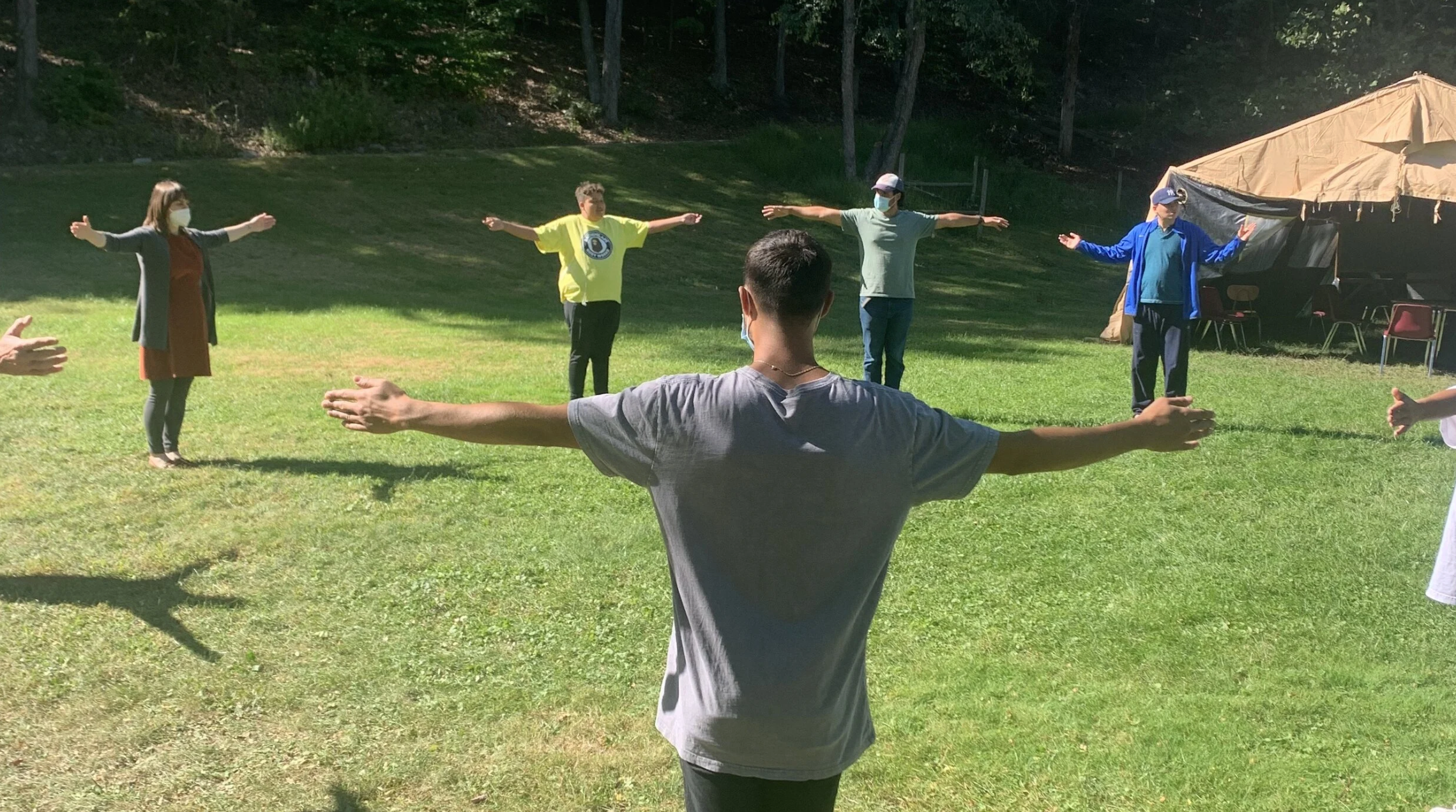
Begin by closing your eyes. Let the head be upright as if hanging from a string. Feel the weight of your body in the chair. Feel the play of the air on your face and your feet on the ground. Listen to the farthest sound you can possibly hear. Sit in that peace and presence for a moment.
Farm + Garden: Reality? There's No App for That
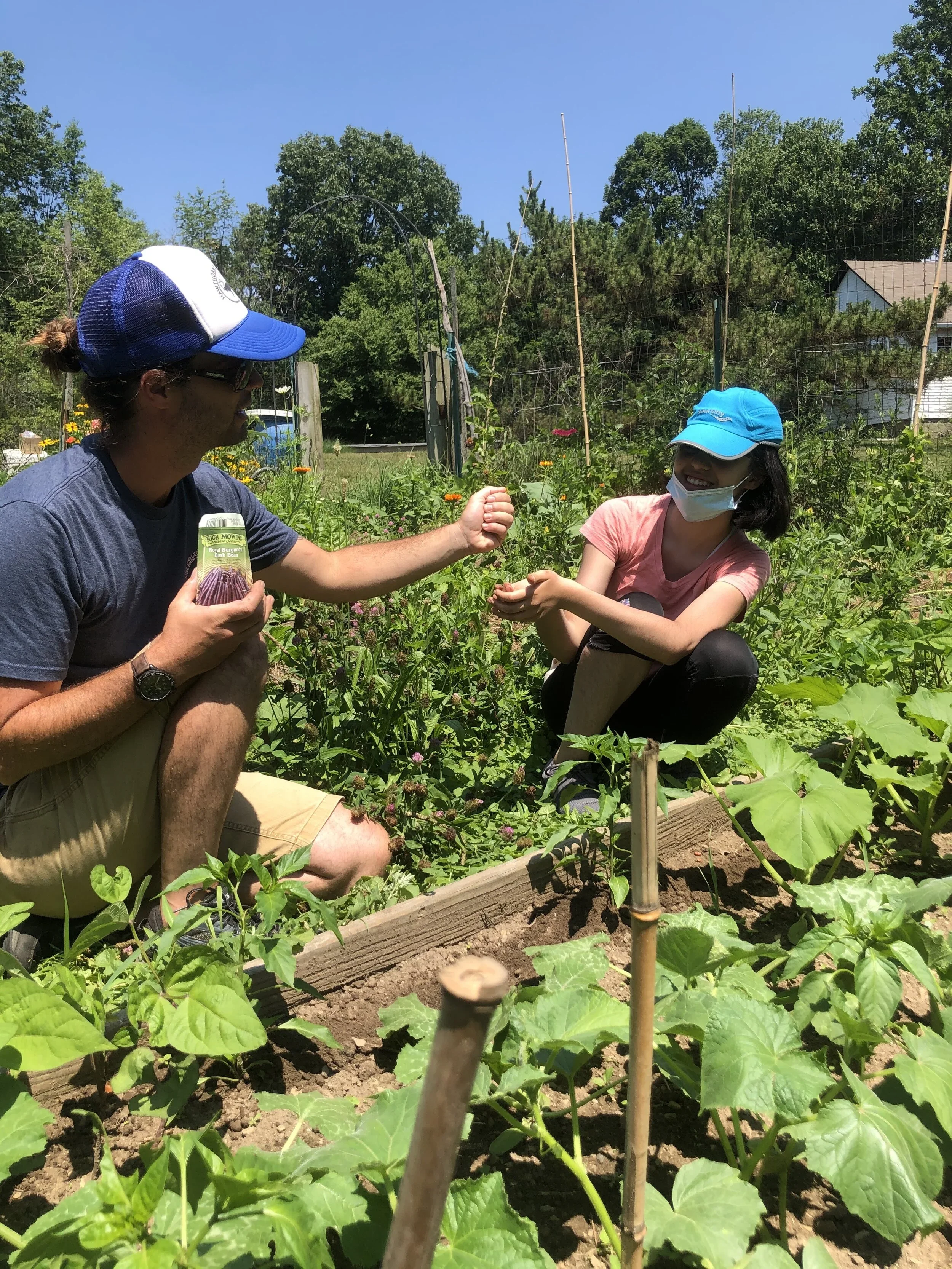
With another winter behind us and spring fully upon us, the level of activity on the farm and in the garden spaces is in high gear. The bursting energy seen in the pinks and whites of blooming fruit trees, and yellow specks of dandelion, is but a part of the manifest vitality surging through the Earth from the soil up, as it reawakens from its wintry rest. Students have joined in the procession of erupting life as they work together to turn over beds planted last fall with rye and pea cover crops, plant trays of the season’s flowers, vegetables and herbs, and prepare the greenhouse for summer crops. Maple syruping already seems ages ago and the summer of cultivating, trellising and harvesting is but a blink of the eye away. As I oversee and work alongside the students, who are busily engaged in digging in groundhog proof fencing along OSS North’s new field, directly seeding sugar snap peas and favas, and improving the fencing around a small multi-species orchard, I see a glimpse into the future.
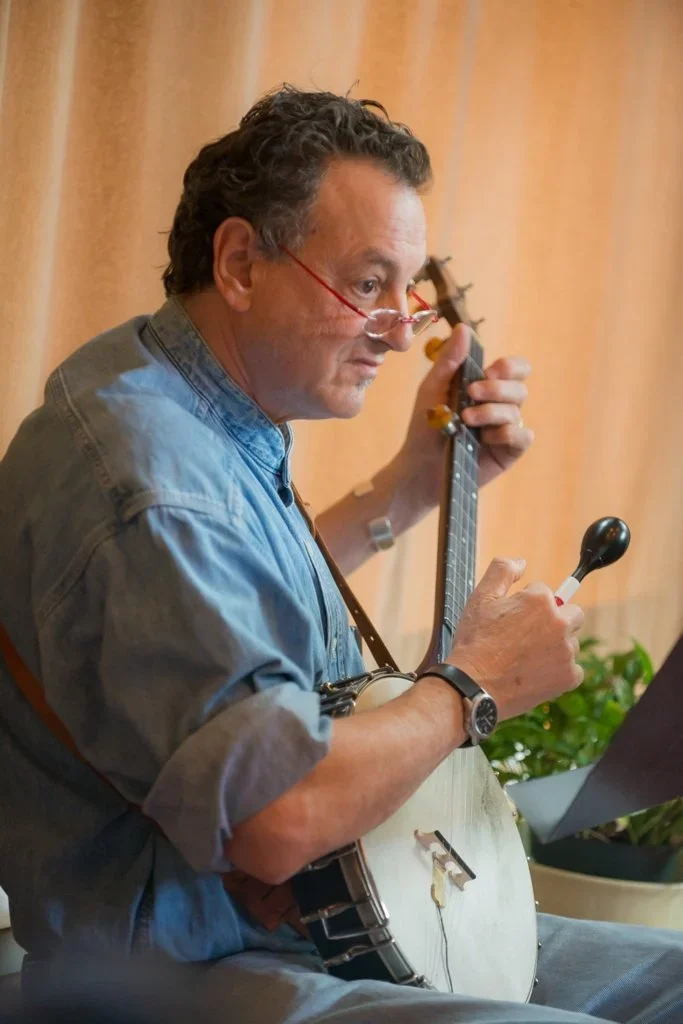
I observe and note that they are not just planting seeds for this year's crops or securing a fence. There is a much bigger picture to their endeavors and collective efforts; a greater cause they are working towards and working for. In their work and their learning, through the tasks they take on in Farm and Garden, they are planting the seeds for a healthier and more consciously caring future of humanity. By exploring and engaging in the protection and preservation of our natural resources and learning techniques with that goal in mind, they are creating a reality that not just them or their family and friends are dependent upon, but that all of humanity depends upon.
A reality that is thoughtful and caring. A reality that is far reaching, expansive and lasting. An unpackaged reality that does not come from a box, screen or app; one that is both tangible in the moment and one that bears fruit in time. A reality that is not just about them and their wants, but one that is for us all. The students practice patience, resilience, fortitude, cooperation and inclusion. Every student, regardless of ability, is depended upon and important. They gather together in community around the one thing that unites all humans, regardless of race, religion, creed, geographic location, age, sex, or identification- food. Through all the multitude of tasks from seed to harvest, including the monotonous, tedious, back breaking, finger bleeding to the bone jobs that Mr. Bosch sets them to - it is all for this one objective, to see themselves in the whole and the whole within themselves. Farm and Garden is merely the backdrop for these ever important lessons in humanity. Within the sharing of tools, working together to carry heavy loads, awareness of others while using large or heavy tools, are embedded the true lessons that will last beyond their schooling years.
Let's Come to Rest
Let's come to rest.
Feel your feet on the ground.
Feel the weight of your body in the chair.
Feel the hands on the lap.
Feel the clothes against your body.
Feel the subtle play of the air against your skin.
Now, open up your listening…
Mr. Leopold’s love and dedication for the children inspired and transformed every child and every individual he worked with. He was a man of integrity, a solid presence at the Otto Specht School. He brought love, wisdom, a great sense of humor, fun, and lots of exquisite music.
Let's come to rest.
Feel your feet on the ground.
Feel the weight of your body in the chair.
Feel the hands on the lap.
Feel the clothes against your body.
Feel the subtle play of the air against your skin.
Now, open up your listening…
Mr. Leopold’s love and dedication for the children inspired and transformed every child and every individual he worked with. He was a man of integrity, a solid presence at the Otto Specht School. He brought love, wisdom, a great sense of humor, fun, and lots of exquisite music.
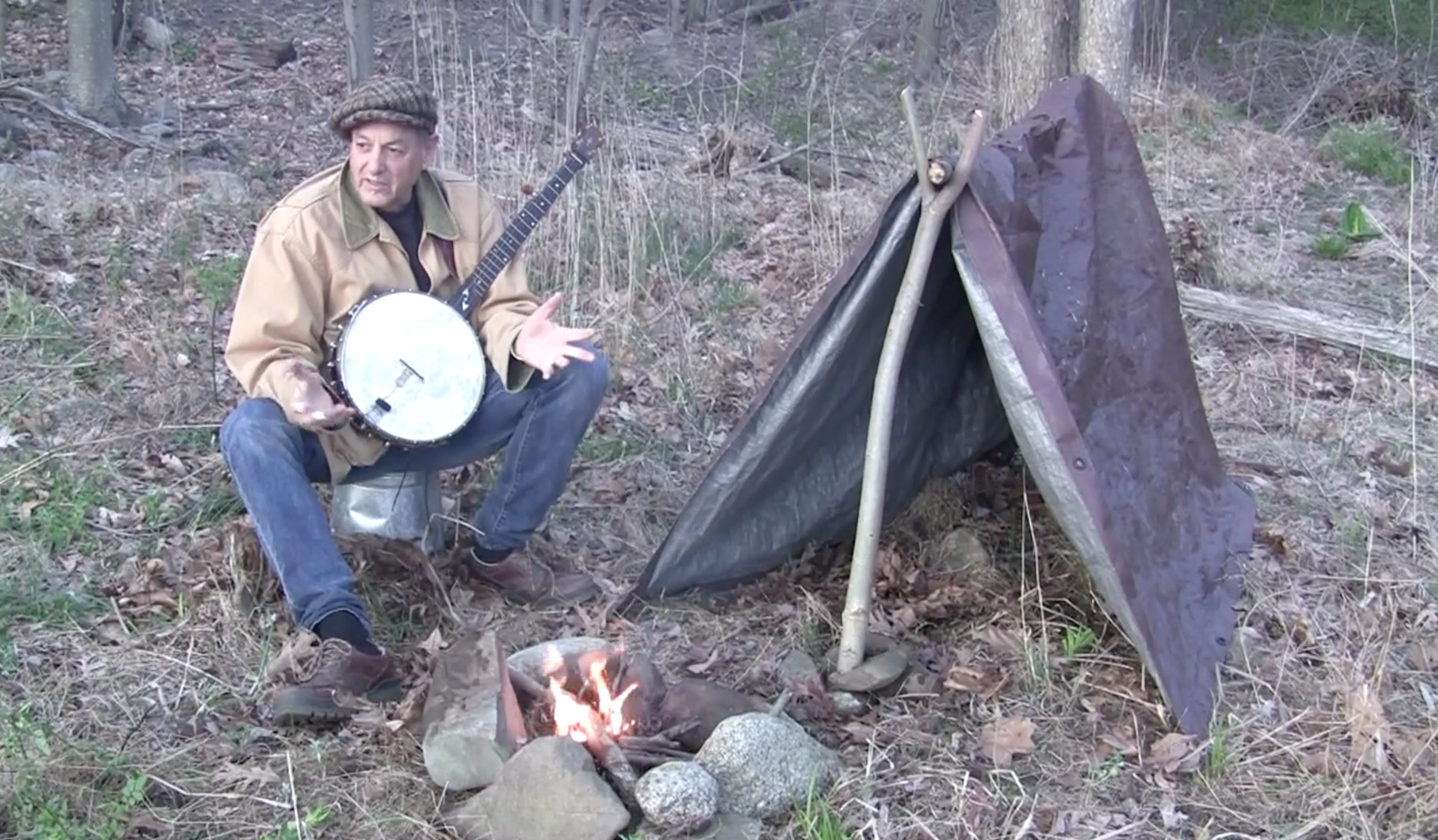
It was Mr. Leopold and his guitar and Banjo that for years now, serenaded each Otto Specht School cultural activity. From our mug exchange to Michaelmas, all school hikes, Maypole, Thanksgiving, and so much more, Mr. Leopold and his guitar and banjo were the soundtrack to our times together.
It was Mr. Leopold and his guitar and banjo and an array of other instruments that accompanied our school plays. From the enchanted forests of of a Midsummer's Night’s Dream to the interplanetary travels of the Little Prince, Mr. Leopold oriented students to the time and space of each changing scene.
When school shut down in March 2020, families of students with Special Needs faced a unique crisis amidst a world in crisis. But Mr. Leopold, and his guitar and Banjo and a maybe half joking idea, was able to keep our students connected as the unabashed star of Mr. Leopold’s Neighborhood and through his daily meditations.
Mr. Leopold was a student of the School of Practical Philosophy - and I believe that the Otto Specht School provided the perfect place to practice, to teach, and to continue his studies.
Sam came to my office once with an idea for a class he wanted to teach to our then 8th graders - “We’re going to oil the wood in the whole auditorium,” he told me. I thought he was crazy to try and spend 45 minutes oiling wood with these three rather high energy young teenagers. That’s great! I told him and entered “Philosophy 101” into their schedules two days per week. The project was never finished. There was a large discussion after one student was found, matches and oiled cloth in hand, and then the Pandemic hit. In that student's semester report, Sam wrote “Self knowledge, though difficult at times, helps everyone.”
No lesson of Mr. Leopold’s was temporal or temporary. In his own words, even his third grade music class was “A forty-five minute music period with a long-range goal in mind”. He wanted to get to know each student and to prepare them - for life, the ultimate final exam. Last year, a student asked, “What is the meaning of life?” Sam said he would have to ask Evan, an elderly member at the Fellowship Community. When the student followed up, Sam reported that Evan had, indeed, told him. “He wouldn’t tell me what he said, though!” the student said to me, “Instead, he said something like - In order to grow you need to come up with questions. You have many questions, and that is good. Now you need to go pursue them.”
Sam had many questions himself. He was an avid learner, fully immersed, patiently hungry to learn, and eager to share. He was excited by ideas, by knowledge, and by debate, and carried an unwavering belief that we can make a difference. In late October, as the pain was becoming harder to bear, I received a text lamenting the fact that he would not make it to meditation with the students. He wrote: “Actually, probably won’t make it today… Please feel free to visit any time. We can have tea and solve the world's problems. “
When one student, very dear to Mr. Leopold heard that he had passed away, he said - “can we come to rest?” The family sat and did a brief meditation, then the student got up, and said - “that was great!”
“Rest in the listening.
This peace, and this stillness - this feeling of wellbeing, this is yourself. This is who you are. And this can be available to you at any time. Any time during the day, you can say to yourself, come to rest.”
To Infinity and Beyond
I first met Mr. Leopold in the fall of 2018 when I was invited to attend a “parent’s evening” at the Garden House. It was our son, Jake’s, first year at Otto Specht and I really didn’t have much of a sense yet of what went on at school. I just knew that Jake was happier to go to school than he had been for many years. That night, we parents participated in “morning greeting” just as the students did every morning. That was my first exposure to Sam’s “listening meditation,” his exhortation to the children to “come to rest” and “open up to the listening.” My first reaction was “Jake actually sits still for this whole thing?” The answer was a resounding yes.
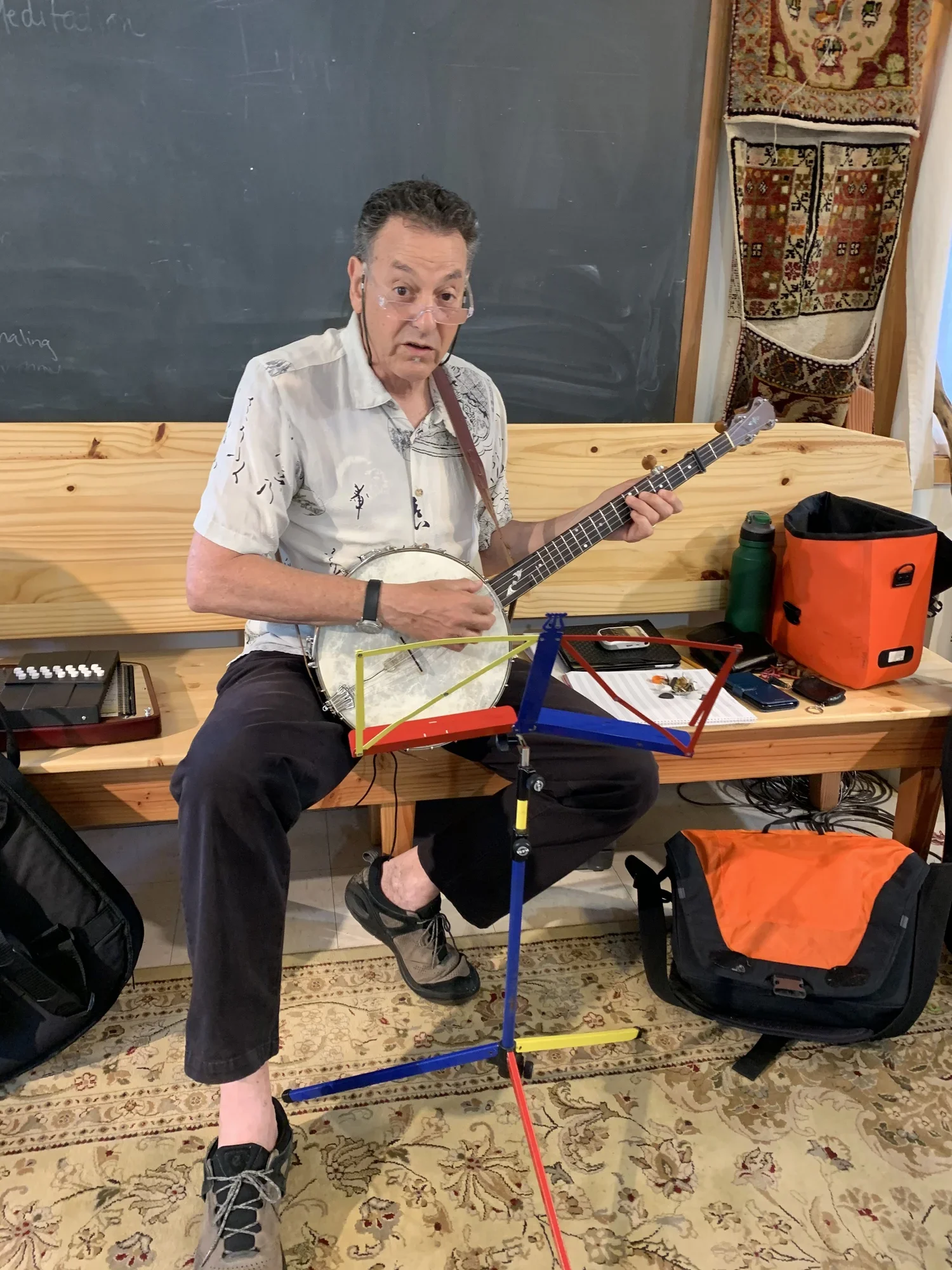
Jake always responded with joy to Sam’s music, begging him over and over to play “Lucy in the Sky with Diamonds” or “Happy Birthday,” but Jake’s love of music was not new. The listening meditation was entirely new to Jake and to me.
I first met Mr. Leopold in the fall of 2018 when I was invited to attend a “parent’s evening” at the Garden House. It was our son, Jake’s, first year at Otto Specht and I really didn’t have much of a sense yet of what went on at school. I just knew that Jake was happier to go to school than he had been for many years. That night, we parents participated in “morning greeting” just as the students did every morning. That was my first exposure to Sam’s “listening meditation,” his exhortation to the children to “come to rest” and “open up to the listening.” My first reaction was “Jake actually sits still for this whole thing?” The answer was a resounding yes.
Jake always responded with joy to Sam’s music, begging him over and over to play “Lucy in the Sky with Diamonds” or “Happy Birthday,” but Jake’s love of music was not new. The listening meditation was entirely new to Jake and to me.
In March 2020, when school closed because of the pandemic, our family, like many others, was having a very difficult time. Jake could not access remote learning, except for thirty minutes of Zoom with Mr. Leopold for “Music and Meditation” at 9:00 am each weekday morning. For weeks, I sat next to Jake while Sam encouraged the students to open-up to the listening. Sam was the only person outside of our family that Jake and I saw regularly for weeks. At the end of the meditation, he would tell the children that “this feeling of well-being, this sense of calm, this rough sense of fun,” “it’s your true nature; it’s your birthright, and you can have that feeling any time you want.” We were all so raw during those weeks, I used to get choked up every time I thought of him saying that. I still do. The last thing we felt during those days was a sense of well-being, calm or any kind of fun, rough or otherwise. I still remember how sad Sam was when John Prine died from COVID. But even on those days when he was sad, Sam’s voice was just what we needed. His rendition of “What a wonderful world” then was so poignant. But much more often than sad, I saw the fun, as the boys sang and danced to his eclectic musical selections. It was during those months that I really understood why Jake was so connected to Sam’s music and to the listening meditation.
Sam had a curious mind. He really wanted to know how the kids’ minds work. He genuinely wanted to understand so that he could meet them where they were, whether through music or song writing or movement. The song he and the students in Garden House wrote called “Scratching and Yawning” still makes me and anyone who knows Jake smile. I loved Sam’s spirit of optimism about what the kids were capable of learning. Jake has had and continues to have many wonderful teachers. But I don’t think anyone has reached Jake on as deep a level as Mr. Leopold. For that, we are so very grateful.
As Sam grew sicker, I still stayed in contact with him by text. At the celebration of his life, our family shared with him how much he meant to us all and I told him how Jake would still watch his music and meditation videos at home from time to time. He was happy to hear that. When I told him that we learned from him that “we can come to rest whenever we want” he said “Isn’t that terrific! I’ve found that too. In my life the introduction of that exercise brought a complete paradigm shift after which I never looked back.” I feel that way too. The last thing Sam wrote me, in a text in mid-October, was “Thank you Jake for bringing us all together. This is your service, and you perform it perfectly! Rest as often as you can.”
When I heard the sad news from Jeanette, I immediately shared it with Jake and the rest of the family. I didn’t know how much Jake would understand or how he would react. He often reacts in atypical ways. He was quiet at first and I wasn’t sure if he had taken in what I said. Then, almost immediately, he asked if we could come to rest and open-up to the listening, open all the way out . . .to infinity and beyond. Truly, Sam’s was a life well-lived. We miss him but are comforted by our memories of him, including wonderful videos of “music and meditation” class. I’m smiling thinking of him resting forever with a sense of well-being, calm and rough sense of fun.
A Palate for Imagination
"If you are a parent or just spend time around kids, you have probably noticed how children’s games evolve as they play freely. One minute, they will be playing King and Queen, and marching in knitted crowns. In the next, they are wild animals digging up the ground to make a nest. Then they become astronauts exploring the moon. Their play continuously flows with bursts of imaginations!" According to Fiber Craft Artist and Otto Specht parent Nao Motomatsu, the environment and materials children are provided with in the Waldorf Early Childhood and younger grades invite all the possibilities of a child’s imagination. "This is one of the reasons Waldorf dolls do not have facial features,” she explains. "A doll with a fixed, usually smiling face may take away an opportunity for a child to imagine a play of minding and taking care of an unhappy, hungry baby, and the subsequent feeling of confidence when the baby is soothed." An expressionless doll, on the other hand, Nao says, "can be sleeping, smiling, or crying depending on their play. Similarly, in the Waldorf Early Childhood and Younger Grades, it is often requested that families avoid characters on clothing that may distract or inhibit one’s own imaginations."
Delving into this principle, Nao created a palate for imagination in curating and creating her child’s wardrobe.
"If you are a parent or just spend time around kids, you have probably noticed how children’s games evolve as they play freely. One minute, they will be playing King and Queen, and marching in knitted crowns. In the next, they are wild animals digging up the ground to make a nest. Then they become astronauts exploring the moon. Their play continuously flows with bursts of imaginations!" According to Fiber Craft Artist and Otto Specht parent Nao Motomatsu, the environment and materials children are provided with in the Waldorf Early Childhood and younger grades invite all the possibilities of a child’s imagination. "This is one of the reasons Waldorf dolls do not have facial features,” she explains. "A doll with a fixed, usually smiling face may take away an opportunity for a child to imagine a play of minding and taking care of an unhappy, hungry baby, and the subsequent feeling of confidence when the baby is soothed." An expressionless doll, on the other hand, Nao says, "can be sleeping, smiling, or crying depending on their play. Similarly, in the Waldorf Early Childhood and Younger Grades, it is often requested that families avoid characters on clothing that may distract or inhibit one’s own imaginations."
Delving into this principle, Nao created a palate for imagination in curating and creating her child’s wardrobe. “Simply finding a wardrobe that is all natural and chemical-free, without cartoons or logos emblazoned across them might seem close to impossible in today’s world, but an outfit or two is where it starts,” Nao says, noting that there are many mainstream brands that have started to sell organic and/or Global Organic Textile Standard (GOTS) certified environmentally friendly clothes which tend to be simple in color and design. Beginning with these basics, Nao engages her child in the addition of natural, creative clothing alterations such as plant dying. “Onion skins can be used for yellows and oranges. Avocado pits and skins create light earthy pinks. It can be more challenging, but if you can get a hold of or grow fresh indigo, you can even achieve emerald and aqua greens.”
The natural dyes used are not just valued for their beautiful colors, but for their healing and cleansing properties. “In the West, the most familiar way to take a medicine is orally,” Nao says, “but in our culture in Japan, people used to apply medicines through fabrics that had direct contact with our skin, including clothing.” The process, she says, is a wonderful way to introduce to children how colors can come from nature, and experiment with tie dyes and other dyeing techniques. For older children, the process can be a scientific experiment; adjust the pH level of a dye bath and rinsing water to achieve different warmth and tones.
For Nao, the art of children’s clothing is not just about the aesthetic. It is functional and reflects, for her family, a way of life. Just as we may choose decor to create the mood of a room, clothing can be chosen or created to encourage learning, promote health, and allow children to live freely into their imaginative play.